personalpaper

Climate Physical Risk

Saturday, October 24, 2026

Top stories

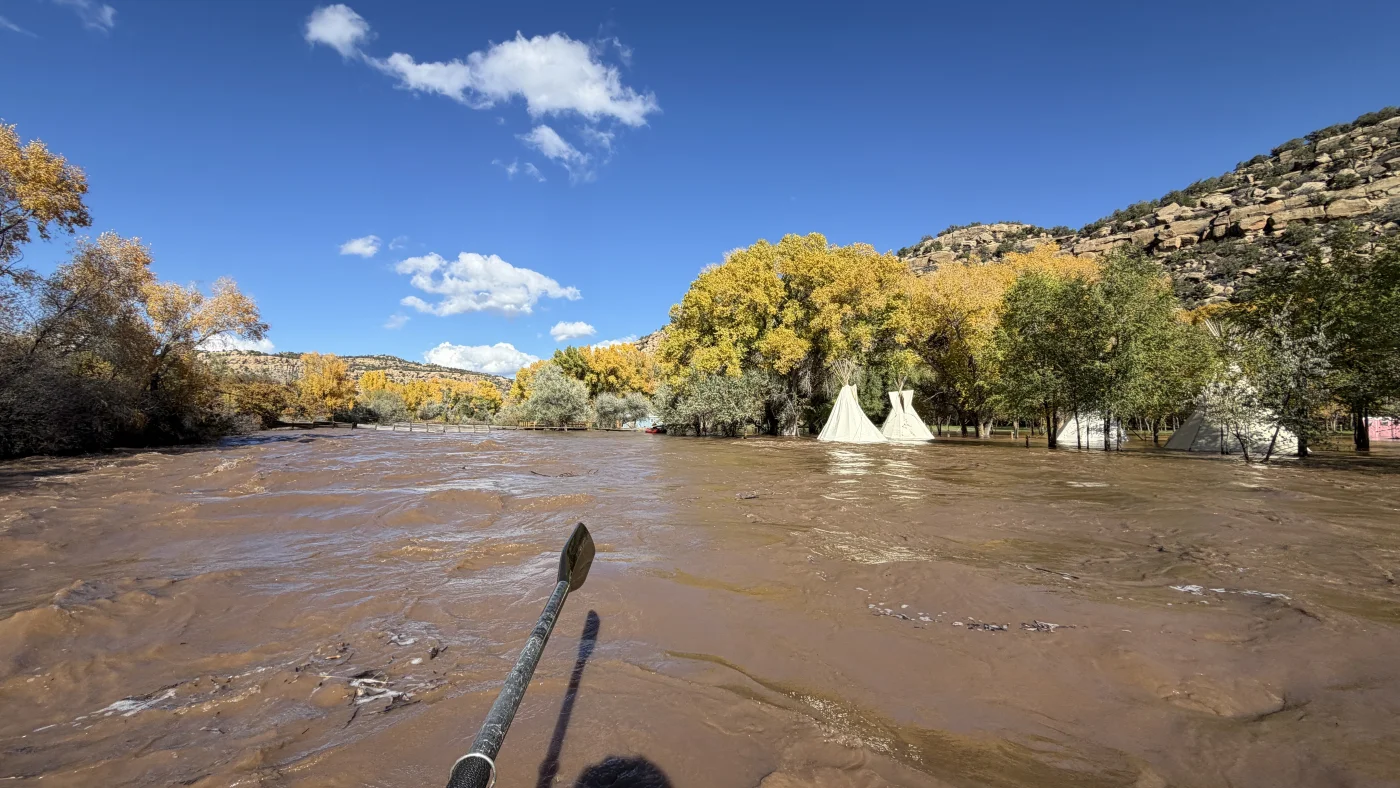
  1. Colorado declares disaster emergencies in 12 counties as Four Corners floods set rainfall recordsWeather volatilityColorado Gov.

Weather volatility4 stories

Colorado declares disaster emergencies in 12 counties as Four Corners floods set rainfall recordsColorado Gov.
NPR · Oct 24 · photo: NPR

Colorado Gov. Jared Polis declared disaster emergencies in 12 counties and sent the National Guard to help with rescues in the southwest of the state, NPR reports, while flooding in Hurricane, Utah, damaged more than 100 homes and RVs and San Juan County, New Mexico, remained under an emergency declaration. The National Weather Service in Grand Junction put rainfall at two to four inches across southwest Colorado and southeast Utah and up to six inches in the San Juan Mountains, totals it called records in themselves; the Animas River in Durango spread to half a mile wide in places. Farmington police reported no deaths as of Friday. Climate scientist Daniel Swain tied the storms to record-warm water off the West Coast, driven by the strong El Niño and a marine heat wave.

Earlier today 3
Singapore serves legal notices on Indonesian firms as fire haze reaches very unhealthy levelsSingapore's National Environment Agency is serving preventive notices under the Transboundary Haze Pollution Act on seven Indonesian companies whose land is linked to the fires, ordering them to deploy firefighters, stop burning and submit plans to put the fires out, Environment Minister Grace Fu said on October 16.
New Straits Times · Oct 16 · photo: Asia News Network

Singapore's National Environment Agency is serving preventive notices under the Transboundary Haze Pollution Act on seven Indonesian companies whose land is linked to the fires, ordering them to deploy firefighters, stop burning and submit plans to put the fires out, Environment Minister Grace Fu said on October 16. Smoke from fires in Kalimantan and southern Sumatra pushed Singapore's 24-hour PSI to 225 in the central region that evening, with three regions in the 'very unhealthy' band; air quality first crossed the unhealthy threshold on September 4, the first time since 2023. In Indonesia, students across Kalimantan and Sumatra have protested over fires the Guardian describes as the most intense in more than a decade.

NASA satellite record shows this year's El Niño on track to outgrow 1997-98NASA's 35-year sea-level altimetry record puts the October 2026 El Niño alongside the 1997–98 and 2015–16 events, and JPL's Josh Willis says it is on track to be bigger than 1997.
NASA Earth Observatory · Oct 23 · photo: NASA Earth Observatory

NASA's 35-year sea-level altimetry record puts the October 2026 El Niño alongside the 1997–98 and 2015–16 events, and JPL's Josh Willis says it is on track to be bigger than 1997. As in 1997, high warm water is pressing against South America, a pattern that brought heavy rain to California and the southern U.S. that winter; the 2015–16 event instead drove flooding in Mexico and the southeastern U.S. NOAA's October 8 outlook gives an 83% chance of a strong to very strong El Niño through March 2027.

Why it matters: Strong El Niños have historically brought fires in Indonesia and the Amazon, drought and crop failure in southern Africa, and coastal flooding in Southern California.

IUCN finds 44% of reef-building corals threatened, with warming the main driverThe IUCN's reassessment of reef-building corals finds 340 of 774 species with sufficient data, 44%, threatened with extinction, up from a third in 2008, and climate change decides the status of more than 90% of the highest-risk species.
IUCN · Oct 22 · photo: IUCN

The IUCN's reassessment of reef-building corals finds 340 of 774 species with sufficient data, 44%, threatened with extinction, up from a third in 2008, and climate change decides the status of more than 90% of the highest-risk species. The data run only to 2020, so the authors expect the true share is higher after the 2023–2025 global bleaching event and this year's El Niño. A separate Red List assessment of reef ecosystems, reported by the New York Times on October 22, classifies most shallow coral reefs as critically endangered and finds 96% could collapse within 50 years if warming continues apace.

Water1 story

Earlier today 1
California's climate assessment projects snowpack falling 40% by mid-century and 60% by 2100California released its Fifth Climate Change Assessment on October 19, led by the Governor's Office of Land Use and Climate Innovation with the Energy Commission, the Natural Resources Agency and the Strategic Growth Council.
Union of Concerned Scientists · Oct 19

California released its Fifth Climate Change Assessment on October 19, led by the Governor's Office of Land Use and Climate Innovation with the Energy Commission, the Natural Resources Agency and the Strategic Growth Council. According to the Union of Concerned Scientists' summary, April snowpack shrinks by about 40% by mid-century and about 60% by 2100, swings between very wet and very dry years grow more frequent, and about 7 million Californians already live in flood-risk areas. The San Joaquin Valley report projects up to about 3°C more warming by 2100 and a loss of up to about 40% of irrigated acreage; statewide warming reaches 1.9–2.4°C by 2050.

Why it matters: The assessment is the state's reference set of projections for water planning, so its snowpack and wet-dry numbers will shape allocation and storage decisions.

Economics2 stories

Earlier today 2
Private flood insurer Neptune grows policies 29% to 336,000 in record quarterNeptune Insurance Holdings, the Florida-based private flood insurer, reported third-quarter revenue up 34% to a record $59.6 million, with written premium up 31% to $132.7 million.
Reinsurance News · Oct 23 · photo: Reinsurance News

Neptune Insurance Holdings, the Florida-based private flood insurer, reported third-quarter revenue up 34% to a record $59.6 million, with written premium up 31% to $132.7 million. Premium in force rose 32% to $450 million and policies in force 29% to more than 336,000, while net income rose 50% to $17.3 million. The company raised its 2026 revenue forecast to $204 million and guided to $238 million for 2027, citing record new business despite a slow housing market and a below-average Atlantic hurricane season.

Why it matters: The growth tracks the shift of U.S. flood risk from the federal program toward private capacity.

Florida insurer Universal lifts profit 32% as reinsurance costs fallUniversal Insurance Holdings, one of Florida's largest homeowners insurers, reported third-quarter net income of $52.5 million, up 32%, on revenue of $439 million, as its combined ratio improved to 91% from 96.4%.
Reinsurance News · Oct 23 · photo: Reinsurance News

Universal Insurance Holdings, one of Florida's largest homeowners insurers, reported third-quarter net income of $52.5 million, up 32%, on revenue of $439 million, as its combined ratio improved to 91% from 96.4%. Its ceded premium ratio fell to 27.6% from 32.7% under the reinsurance programme that began June 1, and direct premiums written in Florida fell 3.3% while other states grew 18.5%. After the quarter closed, Hurricane Isaias made landfall near Destin as a Category 2 storm; chief executive Stephen Donaghy said claims so far were less significant than first expected.

From the desk

Run: ok; 31 of 31 feeds fetched, 120 items in window, 1 story kept, 24 repeats dropped (16 archived stories, most of them kept in this morning's run, which this evening run follows).

Coverage failures: nature.com served a challenge page for the third run today, so the Nature Climate Change paper on southern Africa's rainfall extremes is again unread and not kept.

Proposals: Nature Climate Change has been unreadable on every attempt today; consider adding a readable mirror for its abstracts (the journal's own RSS carries no description), or accept that its papers run only when a press release or desk picks them up. The evening run met a feed list that had barely changed since the morning (8 new items of 120), so the twice-daily cadence mostly re-judges the same items; a single run, or a morning run limited to the 24-hour feeds, would cost less for the same edition.