personalpaper

Climate Physical Risk

Friday, October 30, 2026

Top stories

  1. California water board adopts Bay-Delta overhaul as Reclamation threatens to pull outWaterCalifornia's State Water Resources Control Board voted 4–1 late Thursday to adopt the first overhaul of the Bay-Delta Plan since 1995.
  2. Edison warns stalled California wildfire liability reform will raise borrowing costsInfrastructure and supply chainsEdison International chief executive Pedro Pizarro said on Thursday's earnings call that pushing California wildfire liability reform into 2027 would carry significant and costly consequences, after the legislature declined in September to take up Gov.
  3. Galápagos corals show recent El Niños are the strongest in a thousand yearsTrends and outlooksA study in Science led by Julia Cole of the University of Michigan used living and fossil corals from Wolf and Darwin islands in the Galápagos, some up to 4,500 years old, to reconstruct Pacific sea temperatures month by month.
Galápagos corals show recent El Niños are the strongest in a thousand yearsA study in Science led by Julia Cole of the University of Michigan used living and fossil corals from Wolf and Darwin islands in the Galápagos, some up to 4,500 years old, to reconstruct Pacific sea temperatures month by month.
Yale Climate Connections · Oct 30 · photo: Yale Climate Connections

A study in Science led by Julia Cole of the University of Michigan used living and fossil corals from Wolf and Darwin islands in the Galápagos, some up to 4,500 years old, to reconstruct Pacific sea temperatures month by month. El Niño events of the past 40 years were stronger on average than at any time in the past millennium, an intensification beyond what nearly all climate models produce from natural causes alone. Cole said the strongest recent events have gone beyond El Niño's natural range, pointing to human-caused warming. The study was published in late August; Yale Climate Connections revisited it this week as a strong El Niño builds.
Modeling study finds more snowfall may slow East Antarctic ice loss under strong warmingA modeling study in Nature Climate Change suggests the East Antarctic Ice Sheet may be more resilient to extreme long-term warming than previously estimated.
Nature Climate Change · Oct 30 · headline only

A modeling study in Nature Climate Change suggests the East Antarctic Ice Sheet may be more resilient to extreme long-term warming than previously estimated. Increased snowfall, greater cloud cover and shifts in atmospheric circulation could partly offset ice loss even at very high carbon dioxide concentrations, according to the Phys.org description of the paper. Its sea-level figures and scenarios could not be read.

Why it matters: East Antarctica holds most of the world's land ice, so how fast it loses mass sets the upper end of long-run sea-level projections.

Earlier today 1
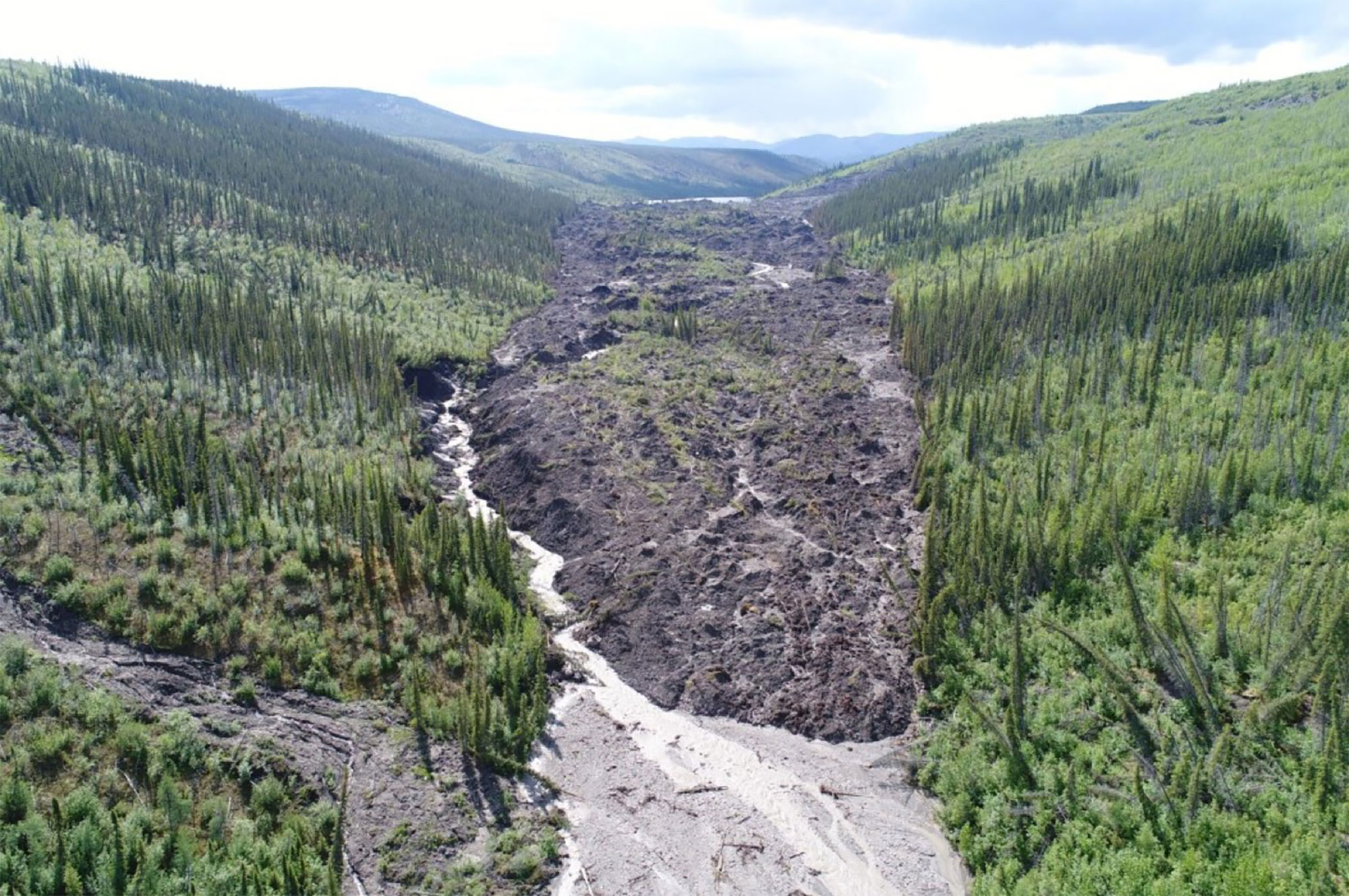
Researchers name a new kind of permafrost landslide, set off by thaw years after wildfireA study led by geoscientist Joseph Young, from work at the University of Alberta, describes a landslide type it calls the permafrost detachment slide, after two failures in Canada's Northwest Territories in 2017 and 2018 that together moved 30 million cubic yards of earth and dammed a river.
Grist · Oct 30 · photo: Grist

A study led by geoscientist Joseph Young, from work at the University of Alberta, describes a landslide type it calls the permafrost detachment slide, after two failures in Canada's Northwest Territories in 2017 and 2018 that together moved 30 million cubic yards of earth and dammed a river. Both trace to a 1995 wildfire that stripped the vegetation shading the ground; about 20 years later the heat reached the base of the permafrost and the slopes gave way over hours or days. Young told Grist such slides have appeared only in the last 10 to 15 years, and their carbon release has not yet been measured.

Why it matters: With the Arctic warming about four times faster than the planet and fires reaching further north, the lag means slopes burned in recent years may fail a decade or two from now.

Water3 stories

California water board adopts Bay-Delta overhaul as Reclamation threatens to pull outCalifornia's State Water Resources Control Board voted 4–1 late Thursday to adopt the first overhaul of the Bay-Delta Plan since 1995.
CalMatters (Maven's Notebook reprint) · Oct 30 · photo: Maven's Notebook

California's State Water Resources Control Board voted 4–1 late Thursday to adopt the first overhaul of the Bay-Delta Plan since 1995. Water agencies can either join the voluntary Healthy Rivers and Landscapes program, backed by $2.9 billion and requiring them to fund flows and habitat work, or fall under a regulatory backup of year-round minimum unimpaired flows. The Bureau of Reclamation has warned it may withdraw and stop funding over what it calls regulatory overreach, putting an expected $740 million federal share at risk; board staff said the plan works without it and would bind Reclamation through the backup. State Water Contractors called the plan micromanagement, while tribes and environmental groups called it too weak, according to CalMatters and Courthouse News.

Why it matters: The rules set how much water California's two largest delivery systems can take from the Delta in drought years, and the federal dispute puts their enforcement in doubt.

Colorado water court approves $1.1 billion pipeline sharing farm water with Denver suburbsA Colorado water court this month approved the $1.1 billion Platte Valley Water Partnership, a 125-mile pipeline, new plains reservoir and diversions linking the Lower South Platte near Sterling to Parker and Castle Rock.
The Colorado Sun · Oct 30 · photo: The Colorado Sun

A Colorado water court this month approved the $1.1 billion Platte Valley Water Partnership, a 125-mile pipeline, new plains reservoir and diversions linking the Lower South Platte near Sterling to Parker and Castle Rock. Parker pays 52% of the cost, the Lower South Platte Water Conservancy District 27% and Castle Rock 20%, and the ruling opens the way to permitting and construction, The Colorado Sun reports. The project is pitched as an alternative to buy-and-dry: its rules bar delivering water taken off farm fields, in a state that has lost more than 30% of its irrigated farmland in three decades.

Earlier today 1
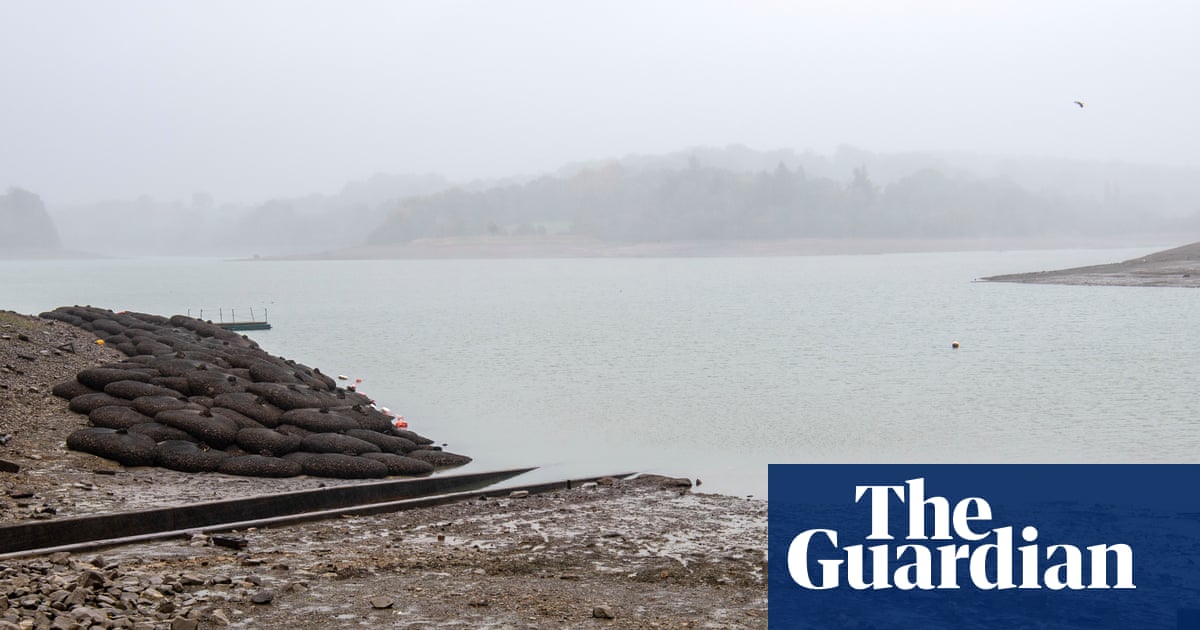
Sussex's Ardingly reservoir falls to 19% as England's drought outlook holds despite stormsSouth East Water's Ardingly reservoir, which supplies about 95,000 properties around Haywards Heath and Uckfield, is 19% full against the roughly 75% the Environment Agency expects at this time of year, and South West Water's Wimbleball stands at 14.5%.
The Guardian · Oct 30 · photo: The Guardian

South East Water's Ardingly reservoir, which supplies about 95,000 properties around Haywards Heath and Uckfield, is 19% full against the roughly 75% the Environment Agency expects at this time of year, and South West Water's Wimbleball stands at 14.5%. The nearby Weir Wood reservoir is 80% full but has been unusable since its treatment works failed in 2018, and Southern Water does not expect to rebuild it before 2030. The national drought group heard on Wednesday that rain from Storms Austen and Boelo has not changed the outlook: almost three-quarters of England remains in drought, and about 120% of average rainfall is needed by April to end it.

Infrastructure and supply chains1 story

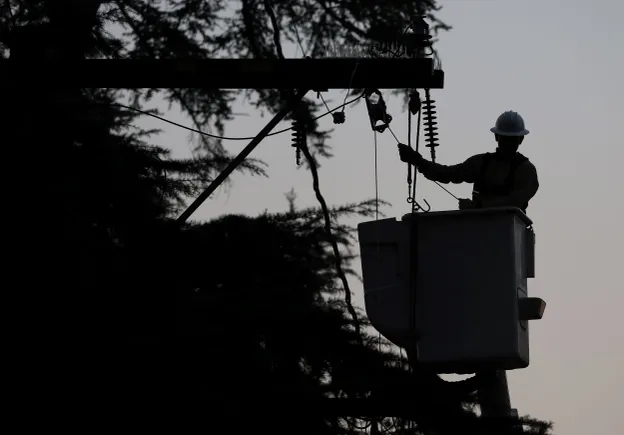
Edison warns stalled California wildfire liability reform will raise borrowing costsEdison International chief executive Pedro Pizarro said on Thursday's earnings call that pushing California wildfire liability reform into 2027 would carry significant and costly consequences, after the legislature declined in September to take up Gov.
Utility Dive · Oct 30 · photo: Utility Dive

Edison International chief executive Pedro Pizarro said on Thursday's earnings call that pushing California wildfire liability reform into 2027 would carry significant and costly consequences, after the legislature declined in September to take up Gov. Newsom's liability proposal and the company's stock fell 23%. Chief financial officer Aaron Moss said elevated credit spreads could add $300 million in customer costs over the life of the bonds Southern California Edison expects to issue in 2027 alone. SCE has recorded $1.8 billion of Eaton fire settlement losses, to be recovered largely from customer-funded self-insurance and the state Wildfire Fund, and faces about 2,000 suits from 38,000 plaintiffs, Utility Dive reports. Absent reform, the utility said it would put safety and reliability spending ahead of load growth in its $38–41 billion five-year plan.

Insurance and risk transfer3 stories

SCOR sees European catastrophe reinsurance prices falling up to low double digits at January 1SCOR's property and casualty chief Jean-Paul Conoscente said on the reinsurer's third-quarter call that the first European programs quoted for the January 1, 2027 renewal show catastrophe price cuts in the high single digits to low double digits, with many submissions not yet sent.
Reinsurance News · Oct 30 · photo: Reinsurance News

SCOR's property and casualty chief Jean-Paul Conoscente said on the reinsurer's third-quarter call that the first European programs quoted for the January 1, 2027 renewal show catastrophe price cuts in the high single digits to low double digits, with many submissions not yet sent. He expects continued pressure on catastrophe pricing after a year of light losses, while group chief Thierry Léger said SCOR will favor margin over volume. Reinsurance News notes the range is a slight slowdown from the 15% fall in Marsh's European property-catastrophe index at the last January renewal.

Earlier today 2
SafePoint more than doubles its Nature Coast Re cat bond to $600m at lower spreadsSafePoint Insurance has raised the target for its Nature Coast Re 2026-2 catastrophe bond to $600m from the $250m it launched with this month, Artemis reports, buying four years of indemnity named-storm cover from December 1 across more U.S.
Artemis · Oct 30 · photo: Artemis

SafePoint Insurance has raised the target for its Nature Coast Re 2026-2 catastrophe bond to $600m from the $250m it launched with this month, Artemis reports, buying four years of indemnity named-storm cover from December 1 across more U.S. states than any of its earlier bonds. Both tranches doubled or tripled in size while price guidance fell: the Class AA notes to 3.75%–4% from 4%–4.75%, and the Class A notes to 6.25%–6.75% from 6.75%–7.5%. The deal has not yet priced.

Why it matters: Florida-based insurers are locking in multi-year hurricane cover while investors accept thinner spreads, a sign of how soft catastrophe pricing has become after a light season.

The Hartford seeks $280m in storm and quake cover at a lower multiple than its last bondsThe Hartford is seeking at least $280m through Foundation Re IV 2027-1, four years of indemnity cover for U.S.
Artemis · Oct 30 · photo: Artemis

The Hartford is seeking at least $280m through Foundation Re IV 2027-1, four years of indemnity cover for U.S. named storms and earthquakes, including D.C. and Puerto Rico, attaching at $1.3bn of losses and exhausting at $1.7bn, Artemis reports. Price guidance of 3%–3.5% against a 1.56% expected loss is a lower multiple than either its 2026 bond, which paid 3.5% on a 1.18% expected loss, or its 2023 bond at 6.25%. The deal would replace the $200m 2023 issue that matures around the end of this year.

Major events1 story

Earlier today 1
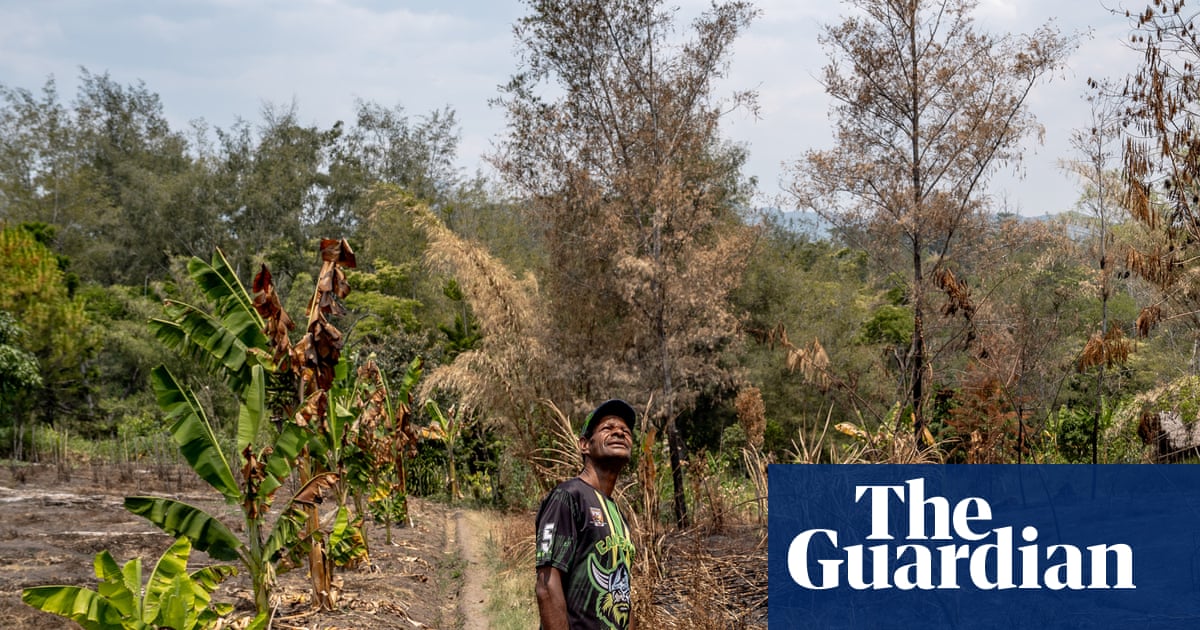
El Niño drought hits up to 8 million in Papua New Guinea as hydropower blackouts beginDrought driven by a strengthening El Niño is affecting as many as 8 million people in Papua New Guinea, the National Weather Service's estimate, with some areas receiving less than a quarter of normal rain since August.
The Guardian · Oct 30 · photo: The Guardian

Drought driven by a strengthening El Niño is affecting as many as 8 million people in Papua New Guinea, the National Weather Service's estimate, with some areas receiving less than a quarter of normal rain since August. PNG Power has started planned blackouts in Port Moresby as dam levels fall, which could last up to 10 months; rivers have dried in Morobe's Bulolo district, where some clinics have stopped taking inpatients, and CARE reports highland families eating one meal a day. A coalition of churches, unions and business groups calls it a national crisis with no coordinated plan; Prime Minister James Marape has told provinces to prepare for a prolonged dry season, and Cabinet is changing financial rules so districts can fund disaster responses.

From the desk

Run: ok. 54 of 54 feeds fetched, 295 items in window, 103 new since this morning's run; 9 shortlisted, 6 stories kept (one headline-only), 30 repeats dropped.

Degraded sources: none among the feeds. Coverage: nature.com and phys.org unreadable again (client wall and HTTP 429), so the East Antarctic ice-sheet study runs headline-only. The Isaias individual-assistance amendment arrived only through Google News redirects with no readable confirmation and was not kept, as on the last two runs.

Proposals: Food and agriculture, Property and communities and Major events produced nothing that cleared the bar this evening; if Food and agriculture stays thin through the week, the Guardian Farming feed and Agri-Pulse may need a crop-weather search feed with readable links. The FEMA Google News feed has failed coverage on three consecutive runs because its links cannot be resolved; replacing it with FEMA's own declarations feed would turn those headlines into readable primary documents.