personalpaper

Aviation History & the Air and Space Museum

Sunday, October 25, 2026

Top stories

  1. Japan's first kamikaze unit strikes U.S. escort carriers off Leyte, sinking St. LoThis day in aviation historyIn 1944, during the Battle of Leyte Gulf, the Imperial Japanese Navy's Divine Wind Special Attack Unit flew its first mission, against two U.S.
  2. Air Force Reserve delivers the combat F-117A 'Overachiever' to the Udvar-Hazy CenterThe Air and Space MuseumThe National Air and Space Museum received an F-117A Nighthawk on 6 October for display at the Steven F.
  3. McDonnell Douglas rolls out the 5,057th and last F-4 Phantom IIThis day in aviation historyIn 1979 the last of 5,057 Phantom IIs, an F-4E-67-MC with U.S.

This day in aviation history4 stories

Japan's first kamikaze unit strikes U.S. escort carriers off Leyte, sinking St. LoIn 1944, during the Battle of Leyte Gulf, the Imperial Japanese Navy's Divine Wind Special Attack Unit flew its first mission, against two U.S.
This Day in Aviation · Oct 25 · photo: This Day in Aviation

In 1944, during the Battle of Leyte Gulf, the Imperial Japanese Navy's Divine Wind Special Attack Unit flew its first mission, against two U.S. Navy escort-carrier groups. Six aircraft from Davao hit Taffy 1 at 7:40 a.m., one crashing into USS Santee and killing 16 sailors; USS Suwanee was struck soon after. Five A6M Zeros led by Lt. Yukio Seki then attacked Taffy 3, fresh from the Battle off Samar, and one crashed through the flight deck of USS St. Lo, which sank at 11:25 after seven explosions.

Ruth Nichols flies a Lockheed Vega from Oakland to Louisville for a world distance recordOn 24–25 October 1931 Ruth Rowland Nichols flew her Lockheed Vega Special, NR496M, non-stop from Oakland Municipal Airport to Bowman Field, Louisville, in 14 hours 23 minutes.
This Day in Aviation · Oct 25 · photo: This Day in Aviation

On 24–25 October 1931 Ruth Rowland Nichols flew her Lockheed Vega Special, NR496M, non-stop from Oakland Municipal Airport to Bowman Field, Louisville, in 14 hours 23 minutes. The FAI credited 3,182.65 km (1,977.61 miles), a world record for straight-line distance that beat Maryse Bastié's mark from June. The next day, as she warmed up the Vega to continue to New York, leaking fuel caught fire and nearly destroyed the airplane; Nichols jumped clear unhurt.

McDonnell Douglas rolls out the 5,057th and last F-4 Phantom IIIn 1979 the last of 5,057 Phantom IIs, an F-4E-67-MC with U.S.
This Day in Aviation · Oct 25 · photo: This Day in Aviation

In 1979 the last of 5,057 Phantom IIs, an F-4E-67-MC with U.S. Air Force serial 78-0744, rolled out at the McDonnell Douglas plant at Lambert Field, St. Louis, and the production line closed. The jet went to the Republic of Korea Air Force under the Peace Pheasant II sale and served with the 17th Tactical Fighter Wing at Cheongju. South Korea retired its last Phantom on 7 June 2024.

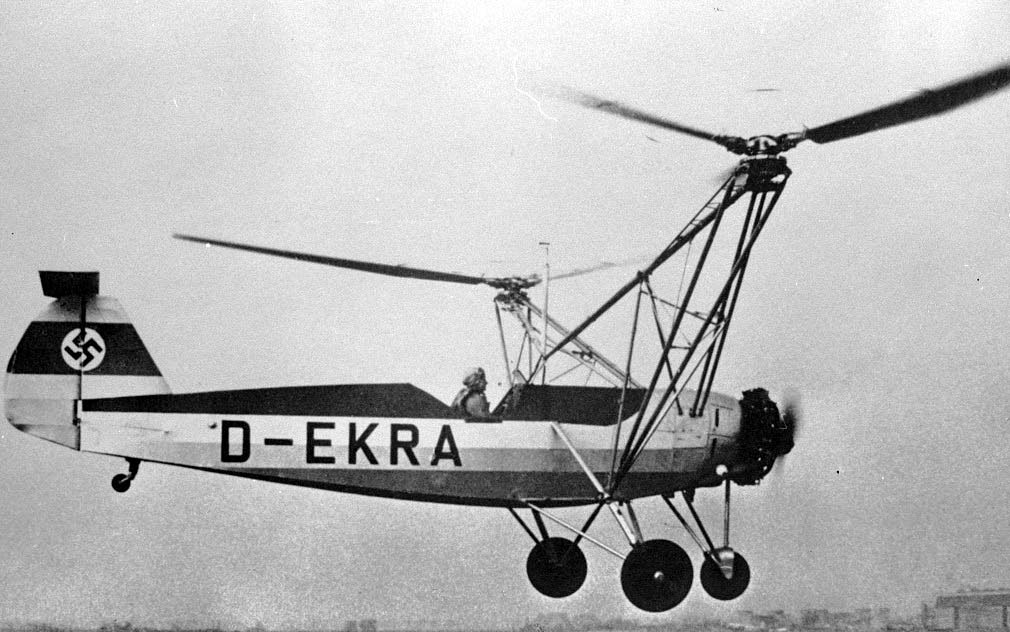
Hanna Reitsch sets a helicopter distance record in the Focke-Wulf Fw 61In 1937 Hanna Reitsch flew the Focke-Wulf Fw 61 about 67 miles from Berlin to Stendal, a world distance record for helicopters.
Vintage Aviation News · Oct 25 · photo: Vintage Aviation News

In 1937 Hanna Reitsch flew the Focke-Wulf Fw 61 about 67 miles from Berlin to Stendal, a world distance record for helicopters. The Fw 61, designed under Heinrich Focke and first flown in 1936, lifted on two three-bladed rotors carried on outriggers and was powered by a 160 hp Bramo radial; only two prototypes were built. The next year Reitsch flew it indoors at Berlin's Deutschlandhalle.

The Air and Space Museum1 story

Air Force Reserve delivers the combat F-117A 'Overachiever' to the Udvar-Hazy CenterThe National Air and Space Museum received an F-117A Nighthawk on 6 October for display at the Steven F.
WJLA · Oct 14 · photo: WJLA

The National Air and Space Museum received an F-117A Nighthawk on 6 October for display at the Steven F. Udvar-Hazy Center, a delivery that Simple Flying revisited on 24 October. Reservists of the 512th Airlift Wing flew the fuselage and two detached wings, 29,500 pounds in all, from Palmdale in a C-5M Super Galaxy after Lockheed Martin's Skunk Works demilitarized the jet. Nicknamed "The Overachiever," it is the only F-117A to fly combat in all four of the type's conflicts, Just Cause, Desert Storm, Allied Force and Iraqi Freedom, before retiring in 2007. It goes on display after reassembly; WJLA gave no public date.

Aviation heritage3 stories

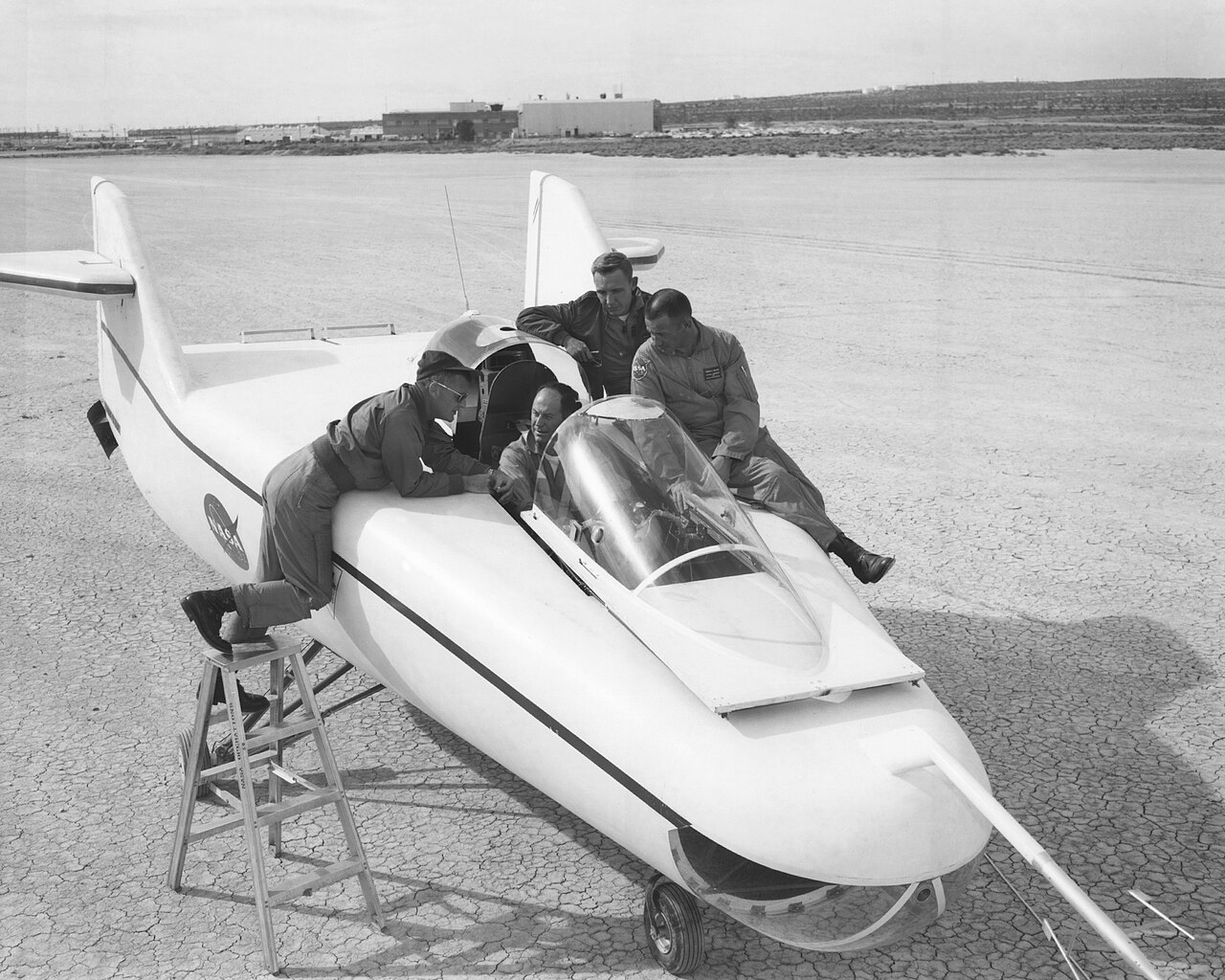
Vintage Aviation News retells Bruce Peterson's 1967 M2-F2 lifting-body crashThe crash in the opening credits of The Six Million Dollar Man was real: NASA research pilot Bruce Peterson's Northrop M2-F2 lifting body hit Rogers Dry Lake at Edwards on 10 May 1967 before its gear locked, at about 250 mph, and tumbled six times.
Vintage Aviation News · Oct 25 · photo: Vintage Aviation News

The crash in the opening credits of The Six Million Dollar Man was real: NASA research pilot Bruce Peterson's Northrop M2-F2 lifting body hit Rogers Dry Lake at Edwards on 10 May 1967 before its gear locked, at about 250 mph, and tumbled six times. Peterson survived but lost the sight of his right eye to an infection caught in hospital. The profile also covers his piloting of the HL-10 on its first flight, 22 December 1966, his work on the Paresev, and more than 6,000 hours in nearly 70 types.
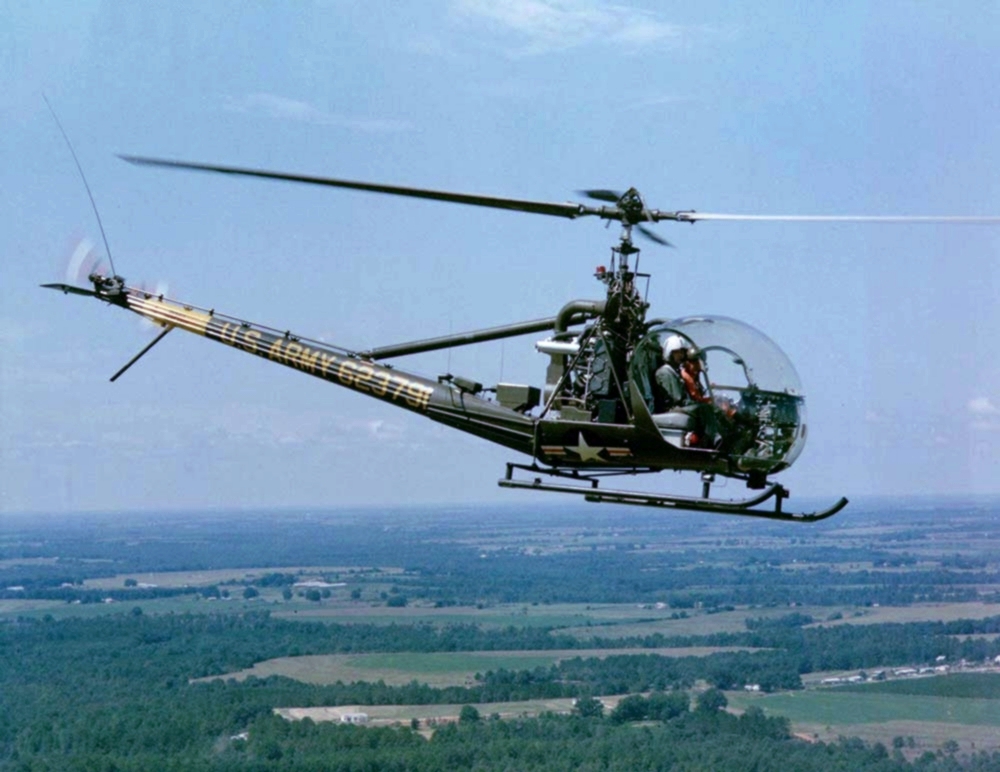
Vintage Aviation News traces Hiller from a teenager's Berkeley shop to bankruptcyStanley Hiller was 17 in 1942 when he opened the West Coast's first helicopter factory in Berkeley to build his XH-44 Hiller-Copter, which flew in 1944.
Vintage Aviation News · Oct 25 · photo: Vintage Aviation News

Stanley Hiller was 17 in 1942 when he opened the West Coast's first helicopter factory in Berkeley to build his XH-44 Hiller-Copter, which flew in 1944. In January 1949 a Hiller 360 became the first civilian helicopter to fly across the United States, and the UH-12 that followed sold more than 2,000. The company's Palo Alto plant later served as a CIA front for CORONA satellite work before Fairchild bought Hiller in 1964; the revived company filed for bankruptcy protection in 2024.
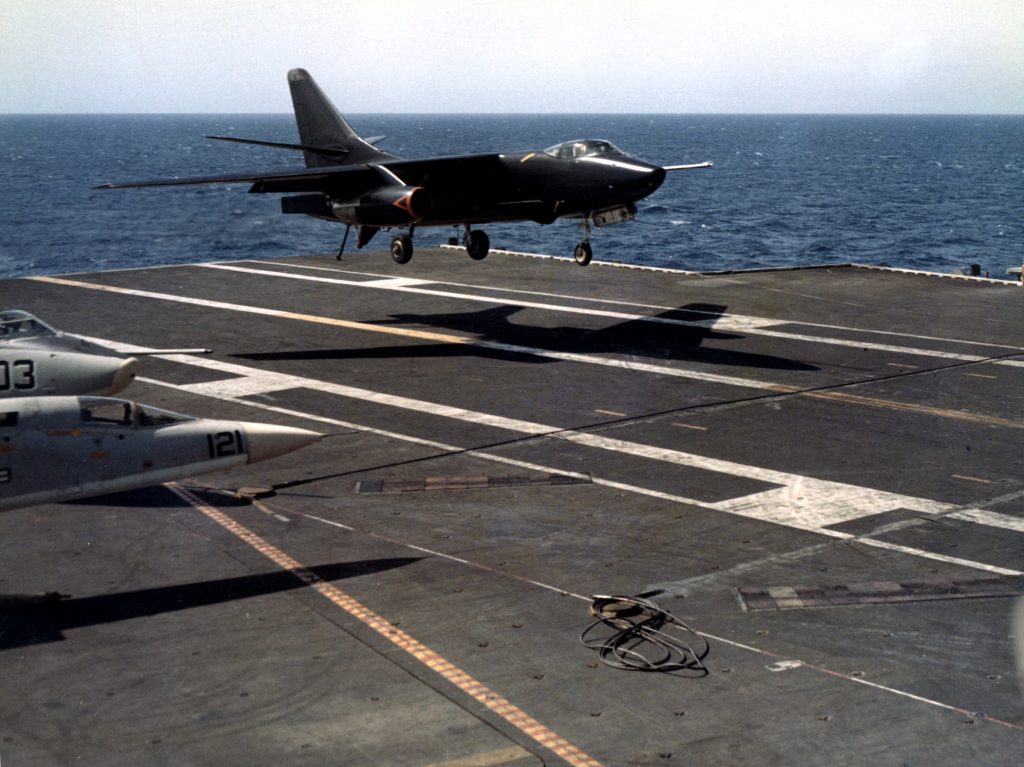
Squadron history recounts VAP-61's two decades of Navy photo mapping and Vietnam reconnaissanceHeavy Photographic Squadron 61, the "World Recorders," formed at NAS Miramar on 20 January 1951 and flew PB4Y-1P Privateers, AJ-2P Savages, F8U-1P Crusaders and RA-3B Skywarriors before it was disestablished on 1 July 1971.
Vintage Aviation News · Oct 25 · photo: Vintage Aviation News

Heavy Photographic Squadron 61, the "World Recorders," formed at NAS Miramar on 20 January 1951 and flew PB4Y-1P Privateers, AJ-2P Savages, F8U-1P Crusaders and RA-3B Skywarriors before it was disestablished on 1 July 1971. Its early work mapped the Mississippi Delta and Alaska for the Army Map Service; from 1964 its carrier detachments flew over Vietnam and Laos, including the first night infrared reconnaissance mission over North Vietnam on 7 August 1966. The squadron lost RA-3B crews to enemy fire in 1966 and 1968.

From the desk

Run: ok. 10 of 10 feeds fetched, 22 items in window, 1 collapsed by the tool; 9 shortlisted, 9 read, 8 stories kept; no repeats dropped (first run, empty archive).

Proposals